
Dolly Parton Death at 80: Her Remarkable Global Legacy
Aug
Dolly Parton death news was confirmed on August 25, 2026, bringing an end to the country music icon’s extraordinary seven-decade career. Parton died in Nashville at age 80 after what her publicist described as a brief battle with cancer.
Born into poverty in the mountains of East Tennessee, Parton became one of the world’s most recognizable performers. Her influence reached far beyond songs such as “Jolene,” “9 to 5,” and “I Will Always Love You,” extending into film, business, humanitarian work, and childhood literacy.
The Dolly Parton death matters because few entertainers have connected with so many generations while maintaining such a clear identity. She transformed personal stories about work, ambition, family, heartbreak, and rural life into music with worldwide appeal.
Table of Contents
- Dolly Parton Death: What the Official Statements Confirmed
- From Appalachian Poverty to the Grand Ole Opry
- Porter Wagoner Helped Introduce Dolly Parton to America
- A Country Songwriter Who Crossed Into Pop Culture
- The Awards Behind Dolly Parton’s Legacy
- Imagination Library May Be Her Most Lasting Achievement
- Why the Dolly Parton Death Resonates Across Generations
- Remembering Dolly Parton Through Music and Fan Culture
- What Happens to Dolly Parton’s Work Next?
- Frequently Asked Questions About the Dolly Parton Death
- Final Thoughts on the Dolly Parton Death and Her Legacy
Dolly Parton Death: What the Official Statements Confirmed
The official memorial published on Dolly Parton’s website confirms that Dolly Rebecca Parton lived from January 19, 1946, to August 25, 2026. It states that she died peacefully in Nashville, Tennessee, at age 80.
The Associated Press later reported that Parton’s publicist, Marcel Pariseau, said she died at Vanderbilt-Ingram Cancer Center while surrounded by loved ones following a brief battle with cancer. No specific type of cancer was identified in the AP report on Parton’s death.
Parton had experienced another major personal loss in March 2025, when her husband, Carl Dean, died at age 82. They had been married for nearly 60 years, although Dean remained largely outside the spotlight during his wife’s career.
Following the Dolly Parton death, her family announced that a small private service would be held for immediate relatives. Instead of sending flowers, the family asked admirers to support Dolly Parton’s Imagination Library, the literacy program that became one of her most important achievements.
From Appalachian Poverty to the Grand Ole Opry
Parton was born in Locust Ridge, Tennessee, and grew up as one of 12 children. Her family lived with limited money in a small home in the Smoky Mountains, but music was central to daily life.
She first performed in church and began writing songs as a child. By age 10, she was singing on local radio and television programs. At 13, she appeared at Nashville’s Grand Ole Opry, years before she would become one of the institution’s defining stars.
After graduating from high school in 1964, Parton moved to Nashville to pursue songwriting and recording. Her early years in the city required patience. Record labels initially struggled to understand where her distinctive voice and personality belonged, but other performers began recording her compositions.
Her Appalachian upbringing never became something she tried to hide. Instead, she turned it into a creative foundation. The experiences of poverty, family loyalty, religious faith, community, and ambition later appeared throughout her songwriting.
“Coat of Many Colors,” inspired by a garment her mother made from scraps of fabric, became one of the clearest examples. The song transformed a painful childhood memory into a story about dignity and the difference between material wealth and emotional richness.
Porter Wagoner Helped Introduce Dolly Parton to America
A major turning point came in 1967 when Parton joined Porter Wagoner’s syndicated television program. The partnership gave her national visibility and helped establish her as a recording artist.
Parton and Wagoner became a successful country duet, beginning with “The Last Thing on My Mind.” At the same time, she continued developing her solo career and strengthening her control over her songwriting.
Her first solo No. 1 country single arrived with “Joshua.” She then gained wider attention with “Coat of Many Colors” before releasing “Jolene,” the urgent plea that became one of country music’s most recognizable recordings.
Parton left Wagoner’s television show in 1974 to build an independent career. “I Will Always Love You” was written as a farewell to her professional partner and reached No. 1 on the country chart. It returned to No. 1 when Parton recorded a new version in 1982.
The song found another global audience through Whitney Houston’s recording for The Bodyguard in 1992. Parton’s decision to retain her publishing rights demonstrated the business judgment that helped her maintain ownership and independence throughout her career.
A Country Songwriter Who Crossed Into Pop Culture
Parton never abandoned country music, but she refused to be restricted by it. “Here You Come Again” became a major crossover success and earned her first competitive Grammy Award in 1979.
Her starring role alongside Jane Fonda and Lily Tomlin in the 1980 comedy 9 to 5 introduced her to an even larger audience. The title song became a workplace anthem, won two Grammys, and received an Academy Award nomination for Best Original Song.
Other important collaborations included “Islands in the Stream” with Kenny Rogers and the Trio album with Linda Ronstadt and Emmylou Harris. Those recordings showed how naturally Parton could move between solo storytelling, pop-oriented duets, gospel, bluegrass, and traditional country harmonies.
Her film career also included The Best Little Whorehouse in Texas and Steel Magnolias. Her warmth and comic timing allowed her screen performances to feel like extensions of her public personality without reducing her to a caricature.
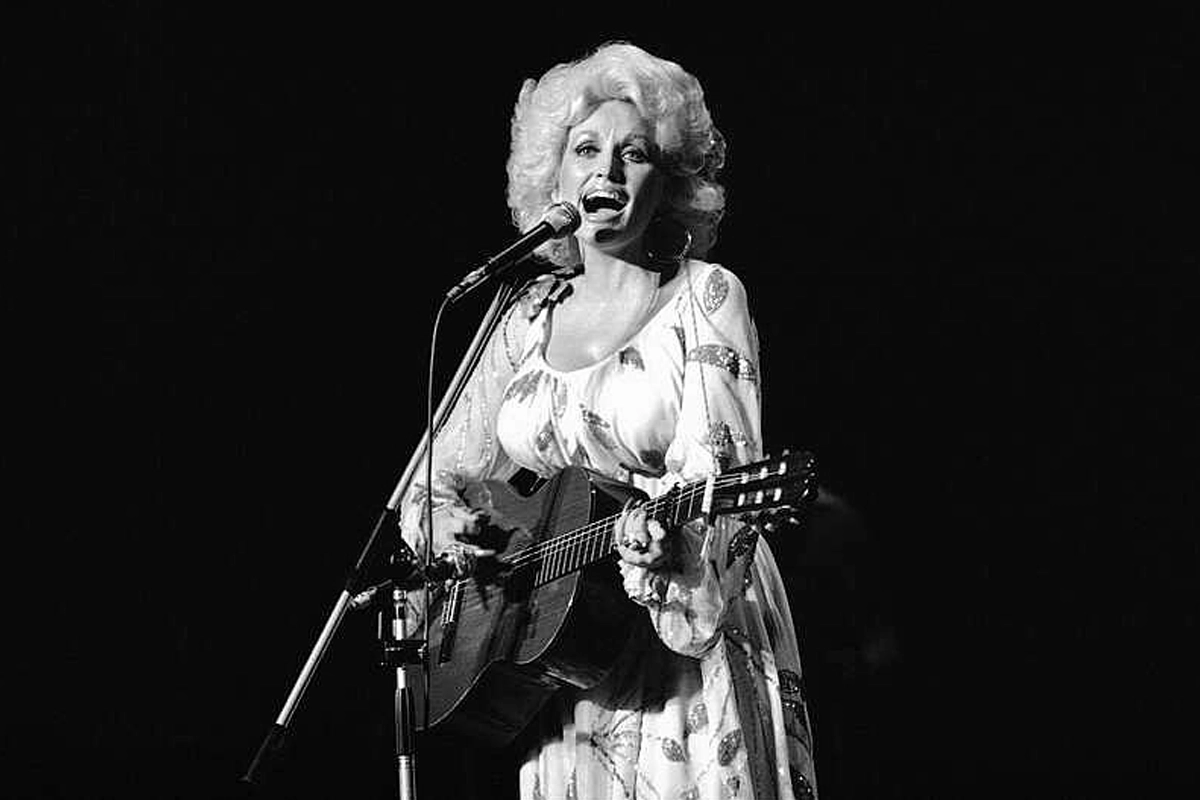
Parton’s style was equally important to her image. Rhinestones, elaborate hair, bright colors, and self-deprecating humor helped make her instantly recognizable. Beneath that glamorous presentation was an artist who carefully controlled her songs, finances, businesses, and public identity.
The Awards Behind Dolly Parton’s Legacy
The Recording Academy’s official Dolly Parton profile lists 10 competitive Grammy wins from 55 nominations. She also received the Recording Academy Lifetime Achievement Award in 2011.
“Jolene” and “I Will Always Love You” were inducted into the Grammy Hall of Fame. Parton was also inducted into the Country Music Hall of Fame and the Songwriters Hall of Fame.
In 2022, the Rock & Roll Hall of Fame inducted Parton as a performer. She initially questioned whether she belonged in the institution, then embraced the honor and released the rock album Rockstar the following year.
The Academy of Motion Picture Arts and Sciences honored her with the Jean Hersholt Humanitarian Award in 2025. That recognition connected her entertainment career with decades of charitable work.
According to AP, her songs generated more than 100 million record sales worldwide and over one billion online streams. Those figures only partially describe her influence because many of her compositions also became hits for other artists.
Imagination Library May Be Her Most Lasting Achievement
Parton launched the Imagination Library in 1995 after reflecting on her father’s inability to read and write. The program began by mailing free books to young children in her home county in East Tennessee.
The official Imagination Library website says the program now operates in the United States, Canada, the United Kingdom, Australia, and the Republic of Ireland. It sends free, age-appropriate books to registered children from birth to age five, regardless of their family’s income.
Millions of books are distributed through the program each month with support from the Dollywood Foundation and local community partners. The project converted Parton’s fame into an ongoing system that helps families build home libraries.
Her philanthropy also included disaster relief. After devastating wildfires affected communities in the Smoky Mountains in 2016, Parton established the My People Fund, which provided direct financial assistance to families whose homes were damaged or destroyed.
Dollywood became another major part of her relationship with East Tennessee. The theme park brought tourism, employment, and long-term investment to the region where she grew up.
These projects help explain why the Dolly Parton death is being felt beyond the entertainment industry. Her influence can be measured not only through awards or record sales, but also through books delivered, families assisted, and jobs supported.
Why the Dolly Parton Death Resonates Across Generations
Parton’s songs were direct without being simplistic. She could write about jealousy in “Jolene,” poverty in “Coat of Many Colors,” independence in “9 to 5,” or professional separation in “I Will Always Love You” without losing the emotional details that made each story believable.
She also maintained an unusually broad audience. Country traditionalists, pop listeners, film fans, younger artists, and people who knew her primarily through philanthropy could all recognize a different part of her work.
Her career offered a model of creative ownership. Parton understood that writing, publishing rights, business decisions, and control of her image were connected. That made her a particularly important figure for women working in industries where major decisions were historically dominated by men.
Although her appearance was deliberately extravagant, her storytelling remained grounded in ordinary experiences. That contrast—rhinestone glamour paired with plainspoken empathy—became one of the qualities that made her difficult to imitate.
Remembering Dolly Parton Through Music and Fan Culture
The most direct way to remember Parton is to revisit her recordings, films, interviews, and charitable work. Supporting the Imagination Library also follows the specific request made by her family.
Music and entertainment history can also live through personal collections and wearable art. TeesParadize readers can explore expressive T-shirts, see the latest New Arrivals, or browse the wider Sports & Fan Shirts collection for other fan-centered designs.
Any commercial tribute should respect intellectual property and official licensing. Parton’s work deserves to be remembered in ways that honor both the artist and the careful control she maintained over her creative identity.
What Happens to Dolly Parton’s Work Next?
Parton’s recorded music, publishing catalog, films, books, and performances ensure that new listeners will continue discovering her work. Her songs are also likely to remain standards for performers across country, pop, rock, bluegrass, and gospel.
The Imagination Library remains active across five countries as of this report. Its continuing work gives Parton’s admirers a practical way to support the literacy mission her family emphasized after her death.
Future announcements concerning memorial events, unreleased projects, or estate matters should be confirmed through Parton’s official website or representatives. Her family has requested privacy and announced only a small service for immediate relatives.
Frequently Asked Questions About the Dolly Parton Death
When did Dolly Parton die?
Dolly Parton died on August 25, 2026, in Nashville, Tennessee. She was born on January 19, 1946.
How old was Dolly Parton when she died?
She was 80 years old.
What caused the Dolly Parton death?
Her publicist said Parton died after a brief battle with cancer. The publicly released statements did not identify a specific type of cancer.
Where did Dolly Parton die?
The Associated Press reported that she died at Vanderbilt-Ingram Cancer Center in Nashville while surrounded by loved ones.
What were Dolly Parton’s most famous songs?
Her best-known recordings and compositions include “Jolene,” “Coat of Many Colors,” “I Will Always Love You,” “9 to 5,” “Here You Come Again,” and “Islands in the Stream.”
How many Grammy Awards did Dolly Parton win?
The Recording Academy lists 10 competitive Grammy wins and 55 nominations. She also received its Lifetime Achievement Award in 2011.
How can fans honor Dolly Parton?
Her family asked people to donate to Dolly Parton’s Imagination Library instead of sending flowers. Fans can also remember her by revisiting her music, films, books, and philanthropic work.
Final Thoughts on the Dolly Parton Death and Her Legacy
The Dolly Parton death closes a remarkable chapter in American entertainment, but it does not end her influence. She established herself as an elite songwriter, a versatile performer, a disciplined businesswoman, and a philanthropist whose literacy work reached millions of families.
Her rise from Appalachian poverty to global stardom was extraordinary. More important was what she did with that success: she retained ownership of her creativity, invested in her home region, and built programs designed to give children opportunities she had never taken for granted.
Dolly Parton leaves behind more than famous songs and rhinestone costumes. Her enduring legacy is the combination of ambition, humor, empathy, independence, and generosity that made millions of people feel connected to her.