


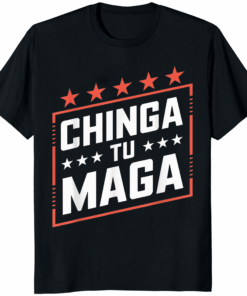
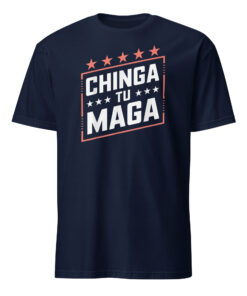


Chinga Tu Maga Shirt
CHF 16.00
- Trusted by over 5000 customers
- Printed-on-demand for the love of nature.
- Printed and Shipped from US or Europe
- Secure Payment
Chinga Tu Maga Shirt: Protest, Fashion, and Free Expression
Introduction: What is the “Chinga Tu Maga Shirt”?
The Chinga Tu Maga Shirt is one of the boldest political statement t-shirts in modern protest fashion. Combining Spanish profanity with American political slang, it instantly grabs attention. Chinga tu translates to “f*** your,” while MAGA stands for Donald Trump’s “Make America Great Again” movement.
Simple in design but powerful in message, the shirt has become popular among progressive audiences, activists, and social media users. It represents both identity and defiance, sparking conversations about free speech clothing and cultural resistance.
In this blog post, we’ll explore the phrase’s meaning, cultural context, controversies, and why this shirt is both a piece of protest history and a staple in modern wardrobes.
Breaking Down the Phrase: Language and Meaning
The slogan’s impact comes from its bilingual defiance.
-
“Chinga tu” is a Spanish profanity translating to “f*** your.”
-
“MAGA” represents Make America Great Again, Trump’s defining political slogan.
Put together, the shirt becomes a direct rejection of Trump-era politics. It’s satirical, offensive to some, but empowering to others. This layered meaning makes it one of the most controversial shirts in today’s political landscape.
Cultural and Political Backdrop
The Chinga Tu Maga Shirt gained traction during the Trump presidency, a time when nationalism and stricter immigration policies defined political discourse. For many in immigrant and Latinx activism circles, MAGA represented exclusion.
This slogan flips that narrative, echoing earlier protest messages like “Chinga La Migra” (“f*** the border patrol”). It resonates particularly with Mexican American protest culture, where humor and defiance are common tools of activism.
The Smithsonian’s overview of the history of protest fashion shows how clothing has long been a tool of resistance. Today, shirts like this are amplified by social media, reaching audiences globally.
Wider surveys also reveal how Americans feel about political expression, highlighting why fashion plays such a visible role in the cultural debate over free speech.

The Rise of Political and Protest Apparel
Clothing has always been tied to movements, but digital culture has made protest t-shirts viral symbols. From Black Lives Matter apparel to feminist slogan tees, activism has merged with style.
The Chinga Tu Maga Shirt thrives because:
-
It spreads quickly on Instagram, TikTok, and Twitter.
-
It bridges streetwear and activism.
-
It’s simple yet controversial, making it easy to replicate and recognize.
This proves that modern activist apparel is more than fashion—it’s a political weapon.
Product Overview: Where Can You Buy a “Chinga Tu Maga” Shirt?
The shirt is widely available on Amazon, Etsy, and independent stores.
-
Amazon: Affordable, mass-produced versions with many reviews.
-
Etsy: Custom-made designs with unique styles and fonts.
-
Independent sellers: Sustainable, made-to-order options aligning with activist values.
Prices usually range between $18–$35, with sizes from S to 4XL. Reviews highlight the boldness of the message, while some listings face review bombing from political opponents.
Printful Product Details: Fabric, Fit, and Durability
Beyond its political message, this shirt is built for comfort and everyday wear. Printful’s version ensures high-quality material and construction:
-
Made of 100% ring-spun cotton for a soft and comfy feel.
-
Sport Grey option contains 90% cotton and 10% polyester.
-
Dark Heather option contains 65% polyester and 35% cotton.
-
Fabric weight of 4.5 oz/yd² (153 g/m²), making it lightweight yet durable.
-
Shoulder-to-shoulder taping provides stability.
-
Double stitching on the neckline and sleeves for added durability.
-
Quarter-turned to avoid a crease down the center.
These details ensure that the Chinga Tu Maga Shirt is more than just a protest slogan—it’s a wardrobe staple designed to last.
Who is Buying It and Why?
This shirt appeals to progressive buyers who use fashion to signal identity and resistance.
-
Activists and protest organizers
-
College students and younger audiences
-
Communities engaged in immigration protest shirts
-
Wearers in red states making bold statements
-
Protesters at rallies and marches
It’s both progressive apparel and a personal declaration of resistance.
Legal and Ethical Considerations
In the U.S., political clothing is protected by the First Amendment, though private spaces can set their own rules.
-
Schools may ban it if it causes disruption.
-
Workplaces may enforce dress codes.
-
Venues may ask wearers to leave.
The ACLU reminds protesters to know their rights when wearing political clothing, but acknowledges gray areas where freedom of expression collides with private regulations.
Criticism and Public Reaction
The shirt is divisive by nature:
-
Conservatives see it as offensive and disrespectful.
-
Progressives celebrate it as free speech clothing.
-
Viral incidents show how it sparks public confrontations.
This balance between insult and empowerment makes it an example of how controversial shirts push cultural boundaries.
Comparison: “Chinga Tu Maga” vs. “Chinga La Migra”
Both slogans are rooted in Latinx protest culture:
-
Chinga Tu Maga rejects Trump and right-wing populism.
-
Chinga La Migra targets ICE and border enforcement.
-
Both embody culturally defiant fashion.
The difference lies in focus—political ideology vs. institutional enforcement.
The Business of Protest Fashion
The shirt raises ethical debates about commercialization.
-
Independent shops produce it as solidarity.
-
Larger sellers profit from controversy.
This tension raises the question: is protest fashion still activism when it’s commodified? Or has it become just another form of streetwear activism?
How to Style It: Wearing the Shirt with Purpose
The shirt works as more than casual wear. Many style it with:
-
Streetwear staples like jeans and sneakers.
-
Protest gear paired with banners or pins.
-
Everyday outfits designed to spark conversations.
It makes the strongest impact when used as part of a larger political message.
FAQs
Is it illegal to wear a “Chinga Tu Maga” shirt in public?
No, political clothing is protected under the First Amendment.
What does it mean?
It translates to “f*** your MAGA,” rejecting Trump’s slogan.
Who sells it?
Amazon, Etsy, and independent stores.
Can I wear it at work or school?
Depends on dress codes; schools and workplaces may restrict it.
Is it available in plus sizes?
Yes, sizes often go up to 4XL.
Final Thoughts: Protest, Fashion, and Free Speech
The Chinga Tu Maga Shirt combines protest t-shirt culture with streetwear activism. It’s offensive to some, empowering to others, but ultimately represents freedom of expression.
With high-quality cotton construction, reinforced stitching, and activist roots, it’s more than fashion—it’s both a cultural statement and a wardrobe staple. Whether at protests, on social media, or in everyday life, the shirt continues to prove that clothing can be both political and powerful.
Be the first to review “Chinga Tu Maga Shirt”
You must be logged in to post a review.
Related products


Reviews
There are no reviews yet.